
One profile, several bar lengths
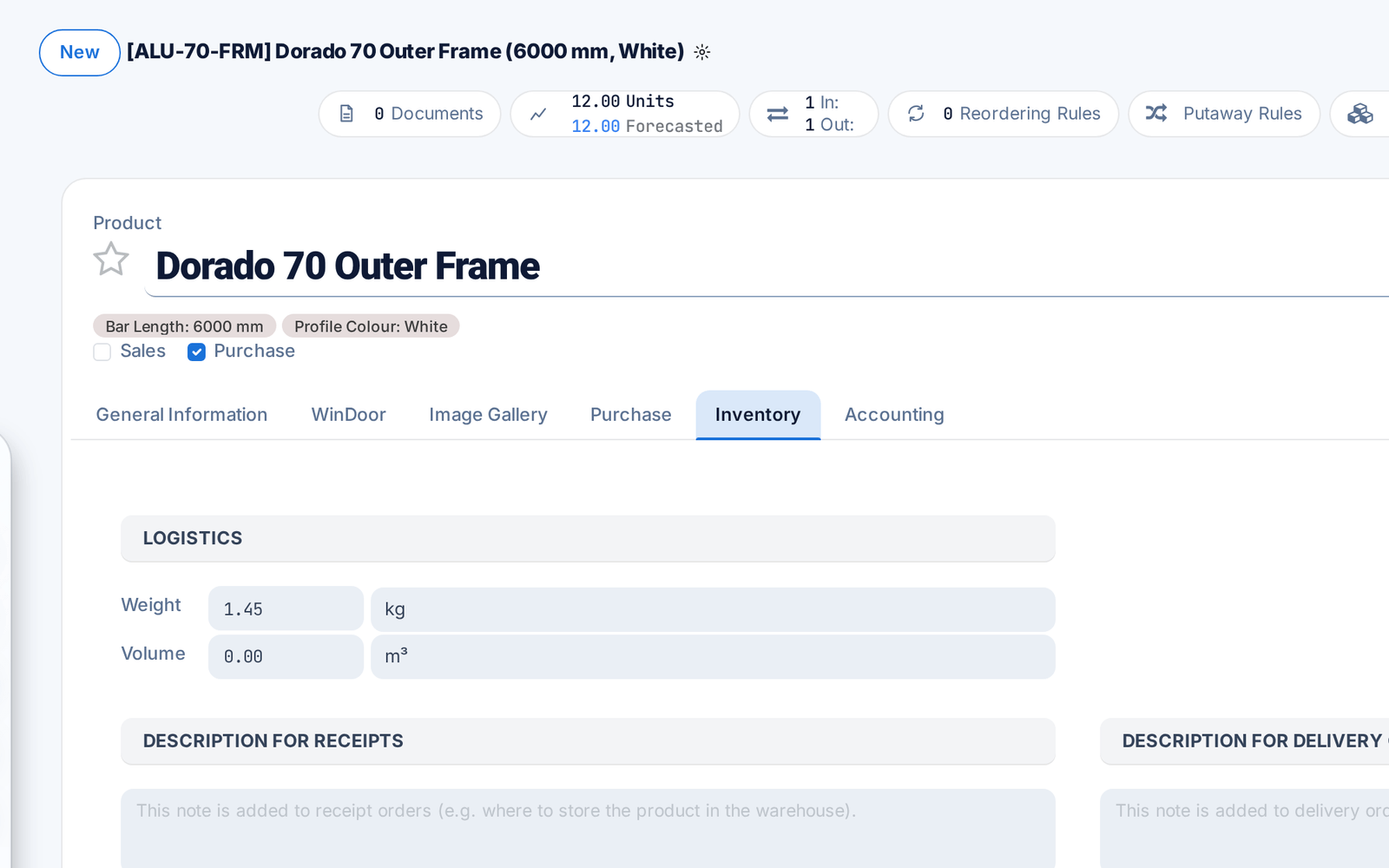
A profile now holds all its bar lengths and colours as one product. Production picks the length that wastes least, or one already in stock.
Before: Each length was a separate product.
A profile now holds all its bar lengths and colours as one product. Production picks the length that wastes least, or one already in stock.
Before: Each length was a separate product.
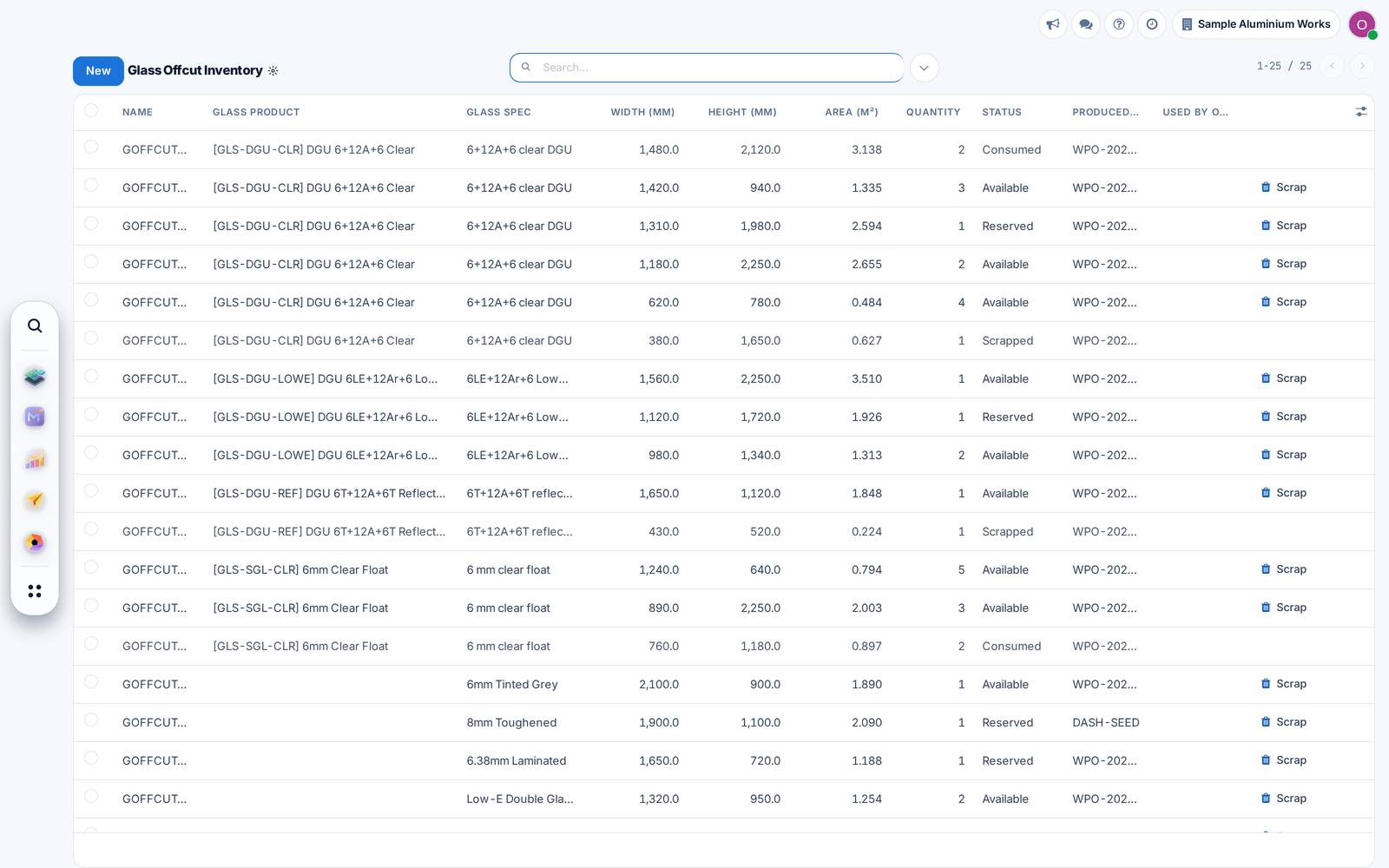
Glass nesting now cuts panes from fitting offcuts of the same glass before opening new sheets, and marks the used offcuts consumed.
Before: Offcuts were stored but never cut from.
The cutting report draws every bar with its named pieces and tick boxes for the operator, and stickers print from the same place on A4 or thermal printers.
Confirming a production order now lists material lines with no stock product behind them, so the store is never surprised.
Before: The order confirmed silently.
Extra material for a production order is now one request with several items and a reason, issued directly or after approval, keeping the order's material cost right.
Before: Each extra item was a one-off action.
Production stock operations are created for each warehouse, and finished windows are delivered following that warehouse's own delivery steps.
A profile's weight per metre now lives only in the product's standard Weight field, so cut lists, material summaries and quotations all use the same value.
Before: The weight could be typed twice and disagree.
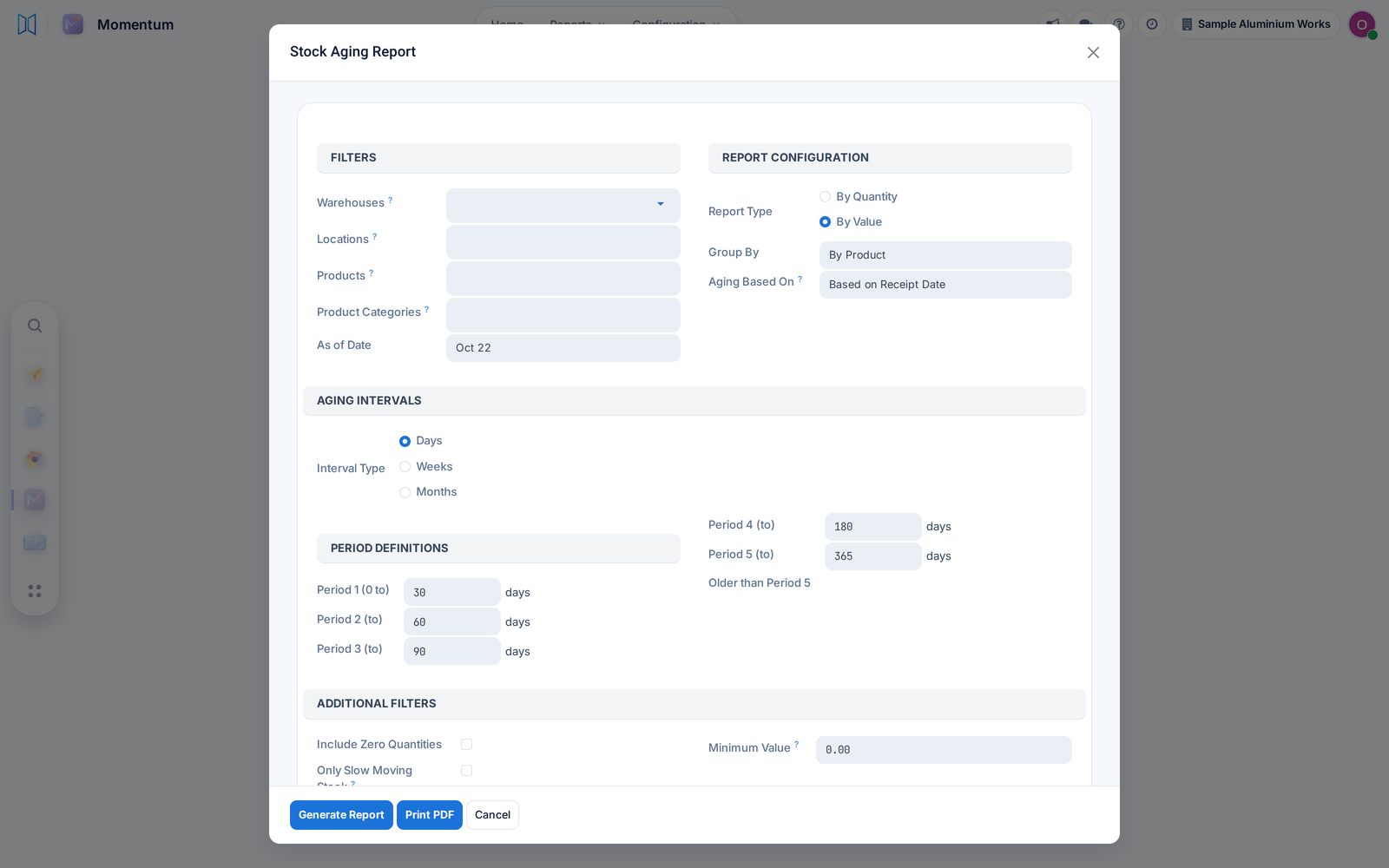
The stock aging report now rebuilds your stock as it stood on the date you choose, aged first in, first out and valued at each receipt's cost.
Before: The chosen date was ignored.