
Glass straight to the site
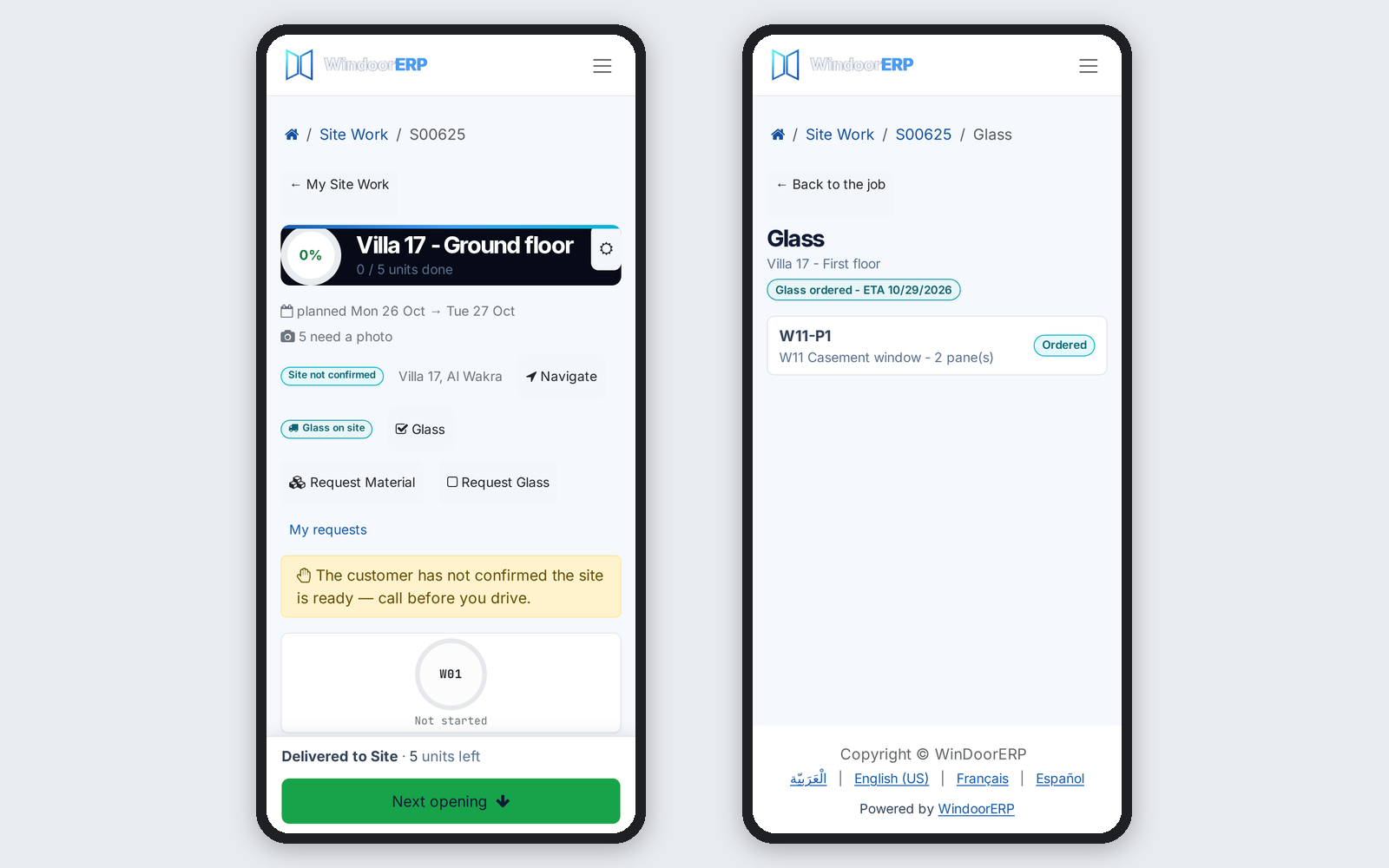
Glass can travel from the supplier straight to the site, one purchase order per work package. The crew ticks the panes received and reports broken ones from the phone.
Before: Glass came through the factory.
Glass can travel from the supplier straight to the site, one purchase order per work package. The crew ticks the panes received and reports broken ones from the phone.
Before: Glass came through the factory.
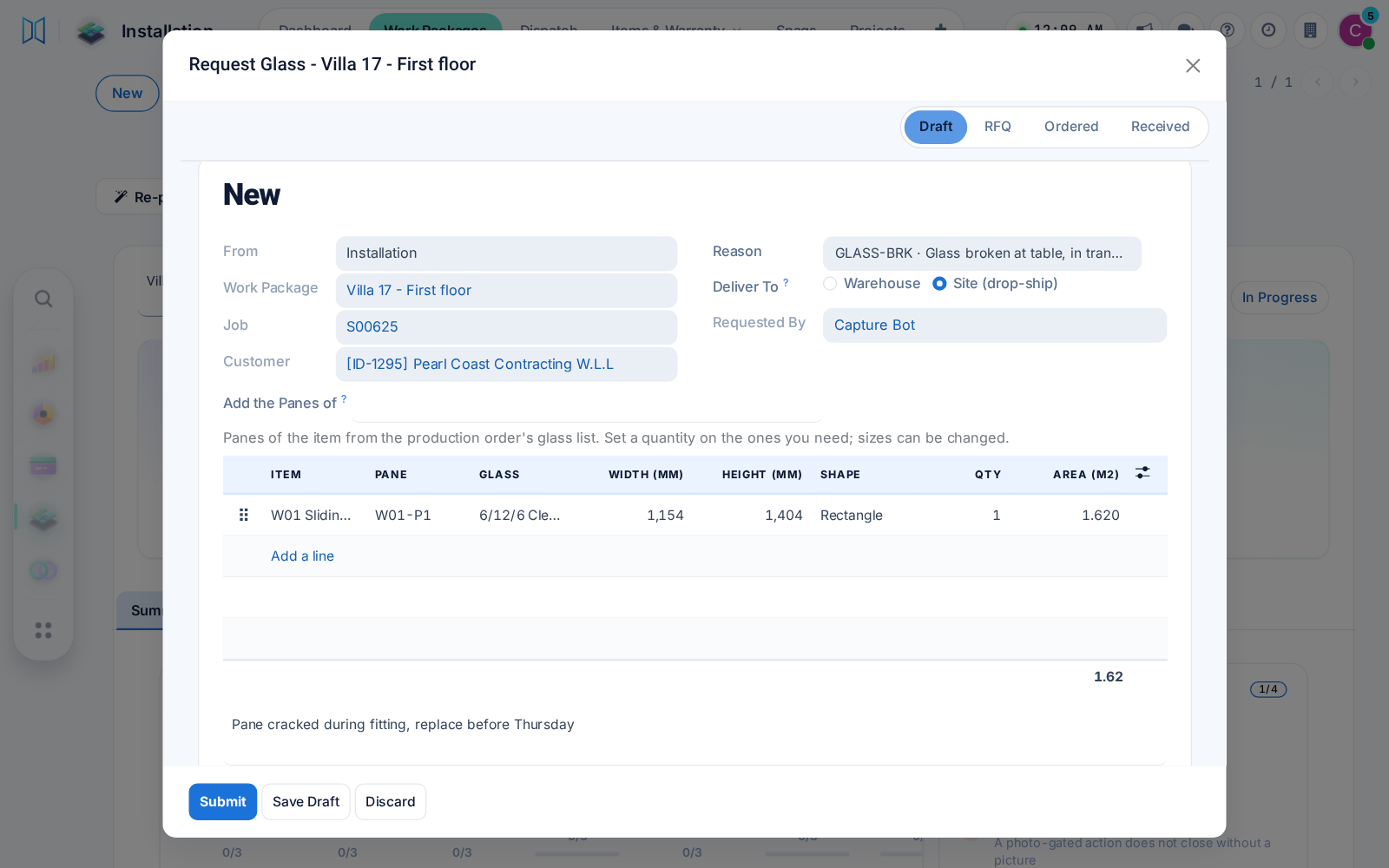
Production, installation and after-sales request glass by size or shape, with panes suggested from the design. Purchasing gets a draft request for quotation per supplier.
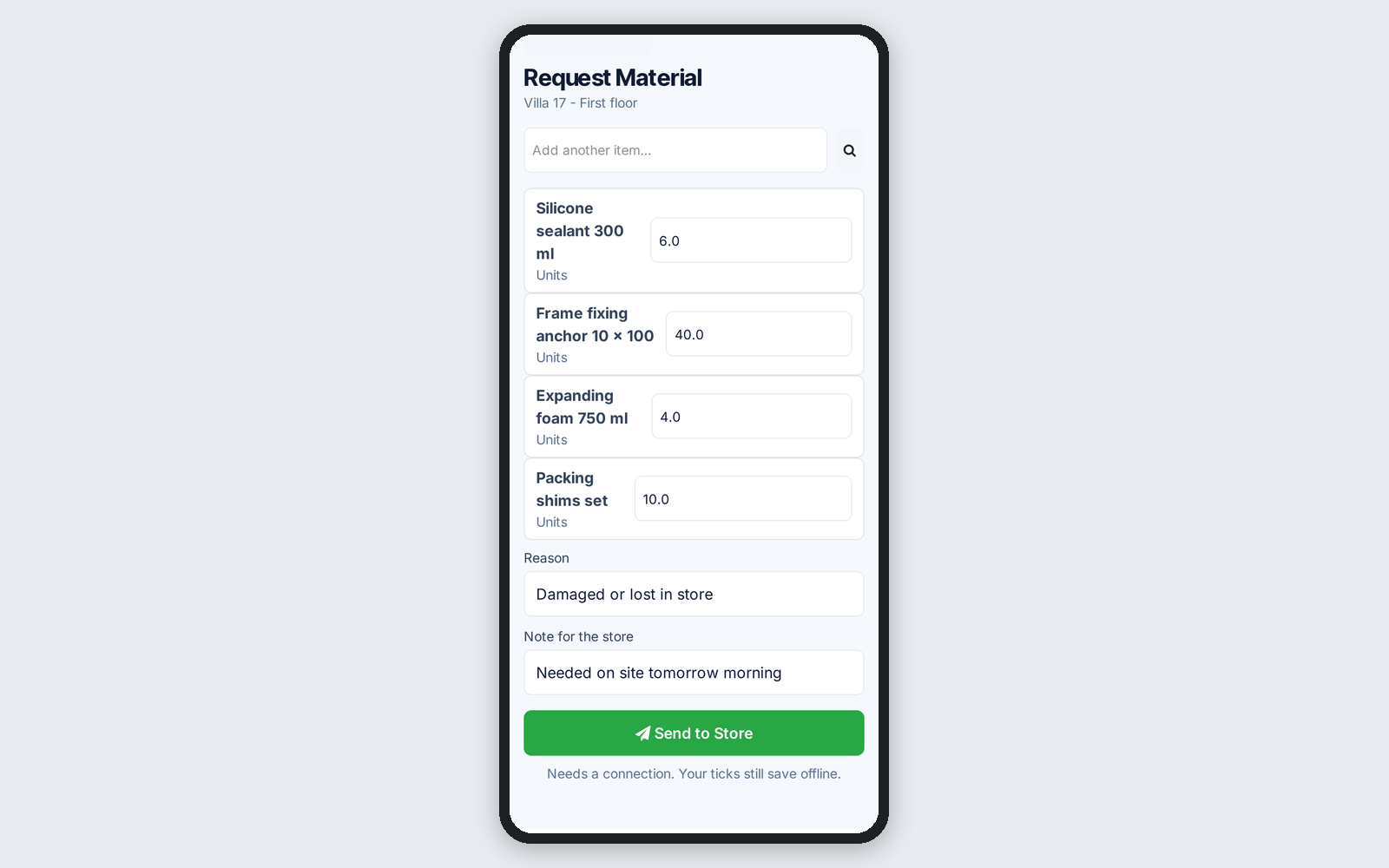
Work packages and the foreman's phone request material from the store with a reason, on the same form production uses for extra material.
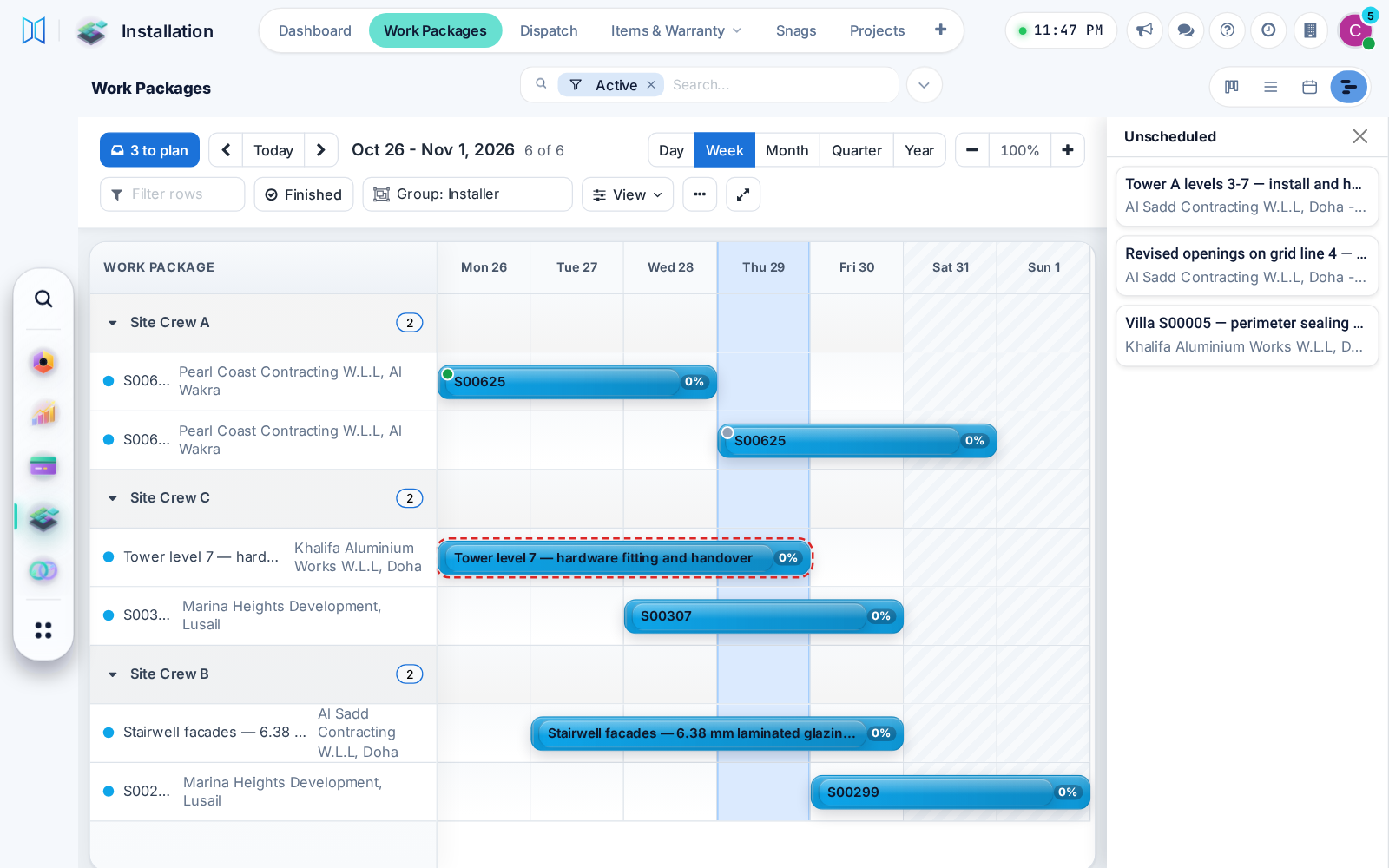
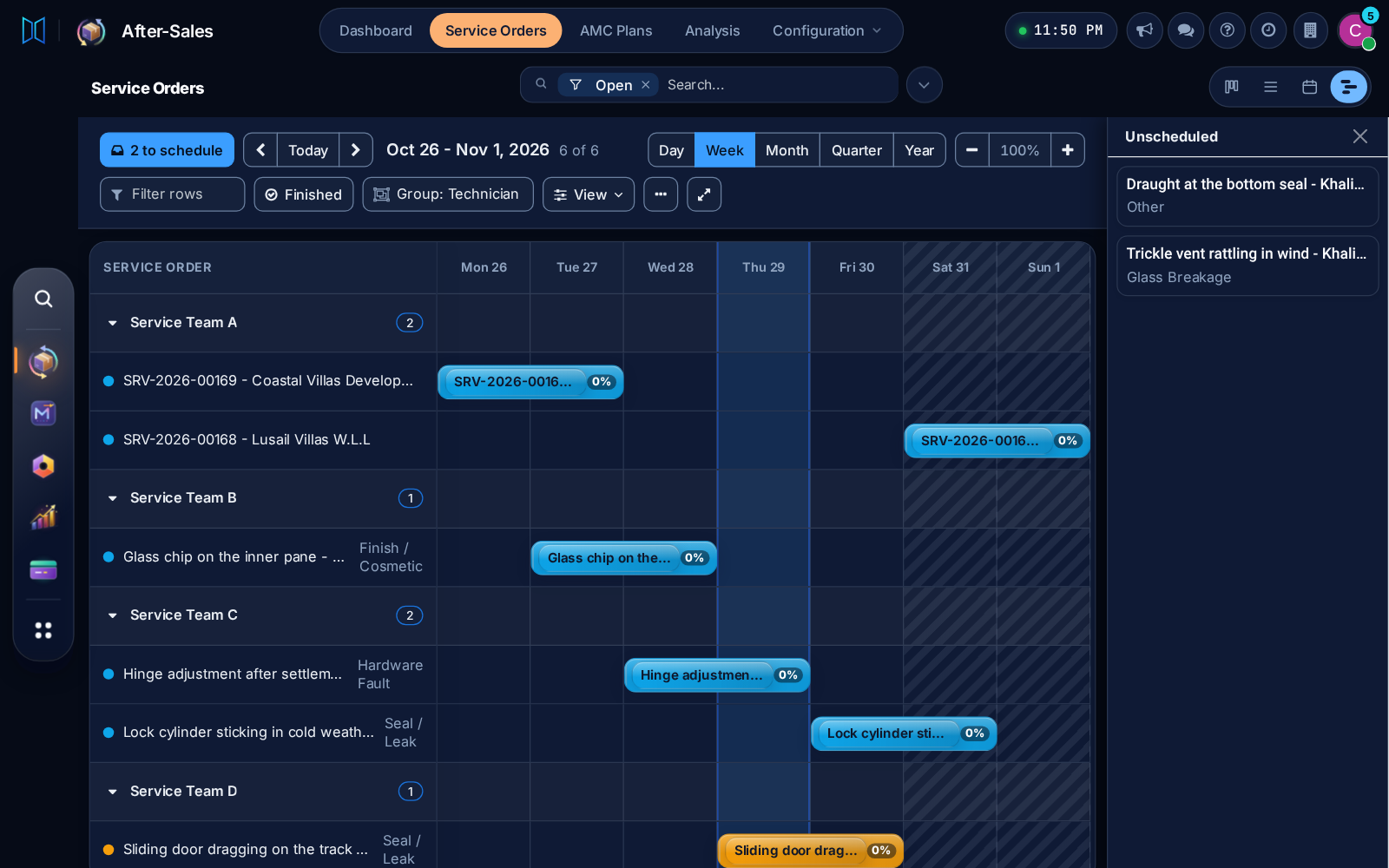
Work packages get a Gantt view: drag packages from a tray onto a day, move a bar to another crew, and spot double-booked crews, on desktop or phone.
Before: A separate schedule menu.
Production orders and service orders use the same Gantt view, with its tray, dark mode and phone layout, so every schedule works one way.
Profile setup now records the finish as Profile Colour and never adds a second colour to a profile that has one.
A profile now holds all its bar lengths and colours as one product. Production picks the length that wastes least, or one already in stock.
Before: Each length was a separate product.
A length correction can now apply to chosen products only, such as a support mullion cut to full frame height. Existing cut lists do not change.
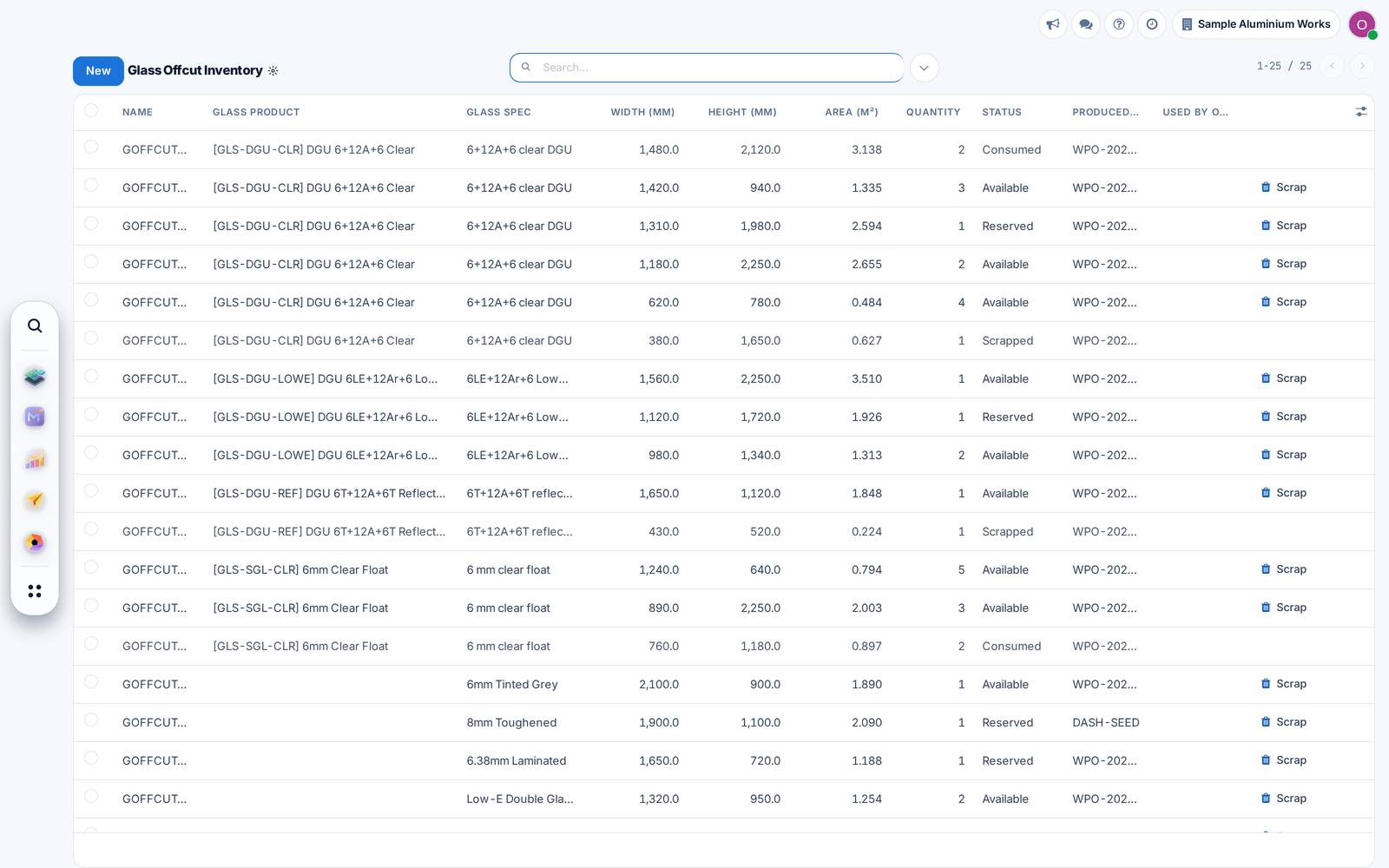
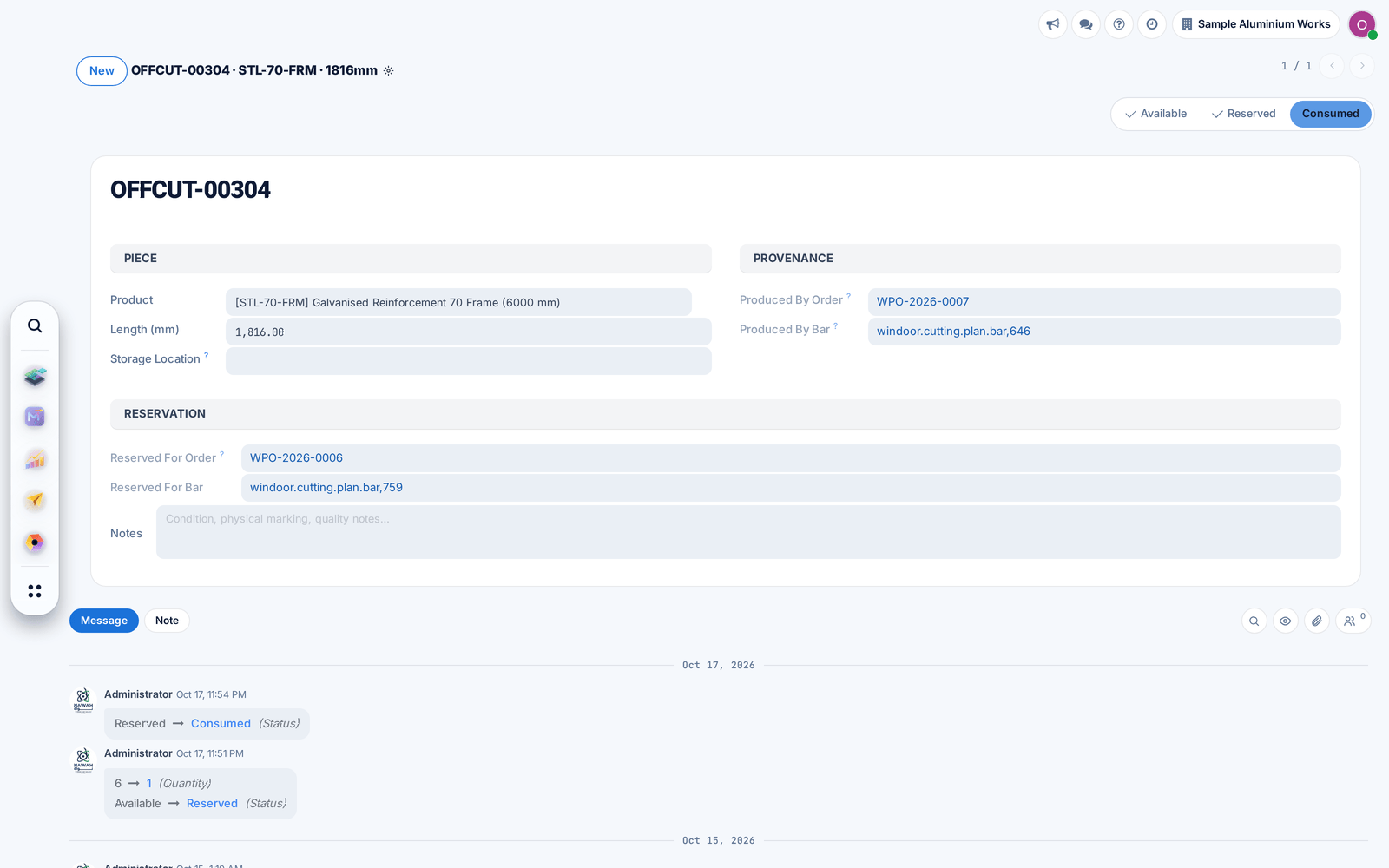
Glass nesting now cuts panes from fitting offcuts of the same glass before opening new sheets, and marks the used offcuts consumed.
Before: Offcuts were stored but never cut from.
The cutting report draws every bar with its named pieces and tick boxes for the operator, and stickers print from the same place on A4 or thermal printers.
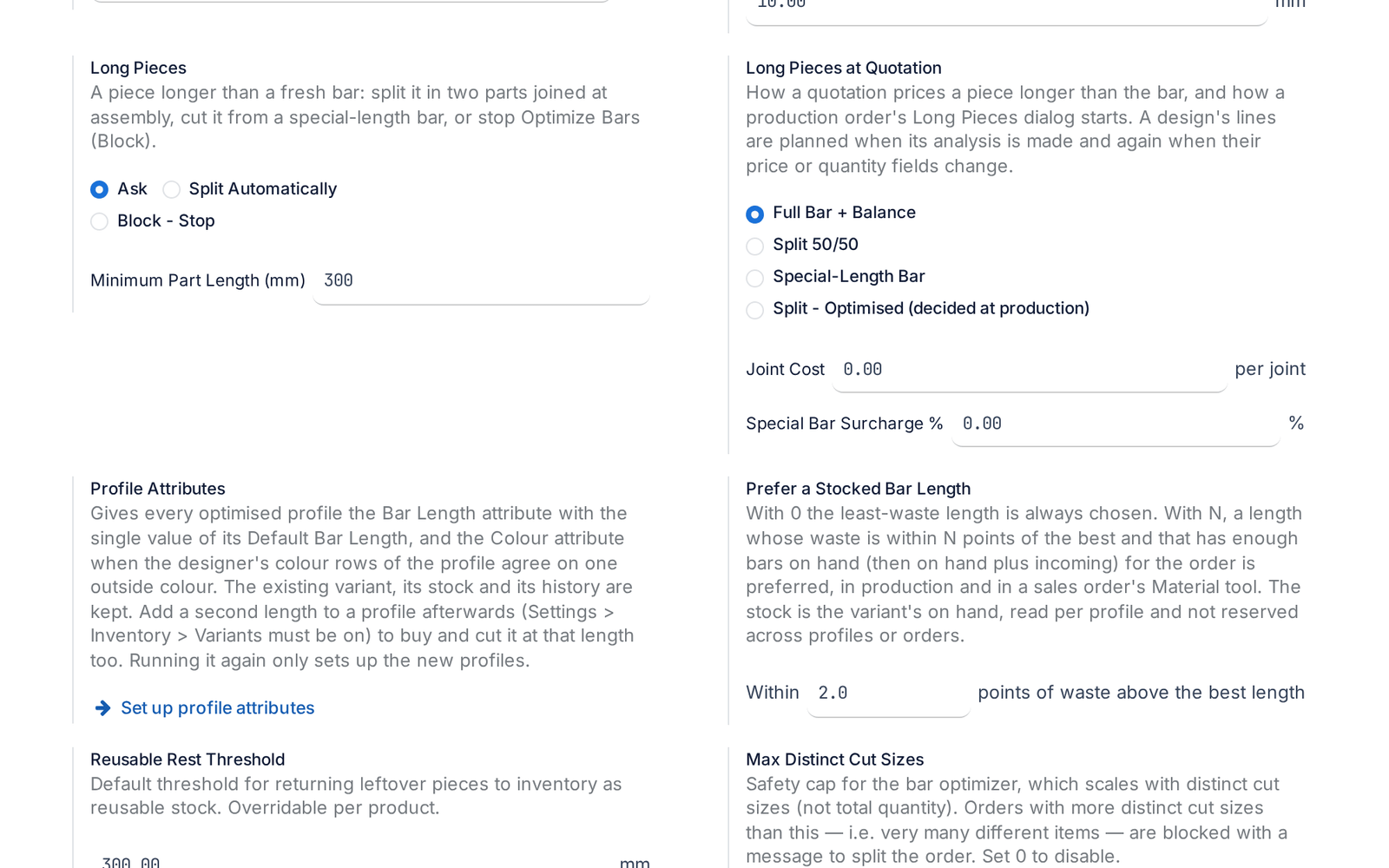
A piece longer than any stock bar is split with a joint or ordered as a special bar, and the quotation already prices it.
Before: Such a piece stopped the optimisation.
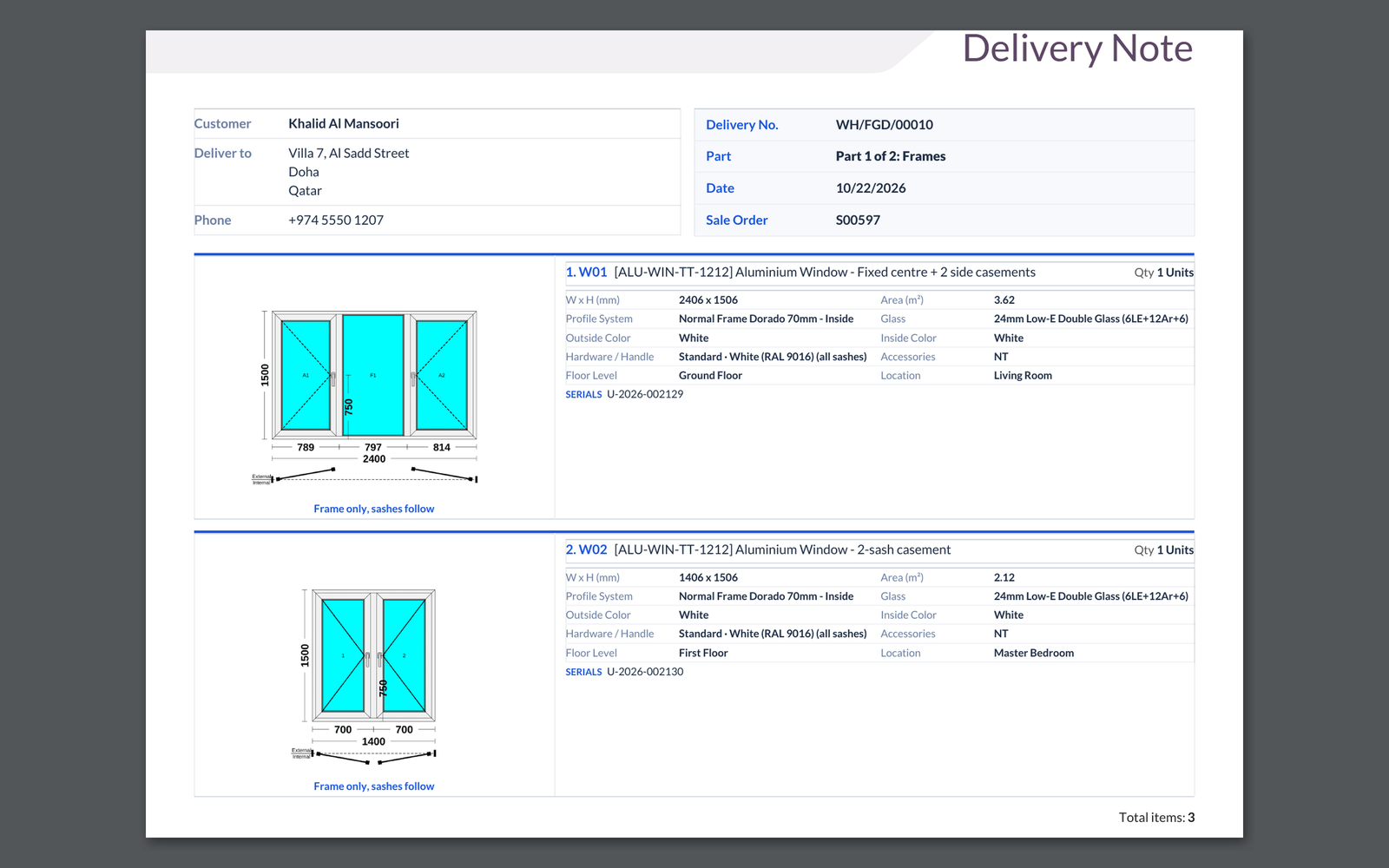
Finished windows can ship on one delivery per sale order, with a delivery note that shows each window's drawing. Each step has its own switch.
Confirming a production order now lists material lines with no stock product behind them, so the store is never surprised.
Before: The order confirmed silently.
Pick the profile product for each mullion, frame side or sash in the designer. The drawing width and the cut list follow your choice.
Before: One default profile served every member.
Offcuts open with a history of their changes, and finished or cancelled production orders hide the material buttons that no longer apply.
Before: Opening an offcut raised an error.
Extra material for a production order is now one request with several items and a reason, issued directly or after approval, keeping the order's material cost right.
Before: Each extra item was a one-off action.
Production stock operations are created for each warehouse, and finished windows are delivered following that warehouse's own delivery steps.
A salesperson with ordinary rights can pick any customer, add lines by hand and confirm with a project, and buyers can record vendor bills.
Before: These steps needed extra rights.
Profile systems without reinforcement no longer add steel to the cut list, and progress invoices with outdated deductions were recalculated.
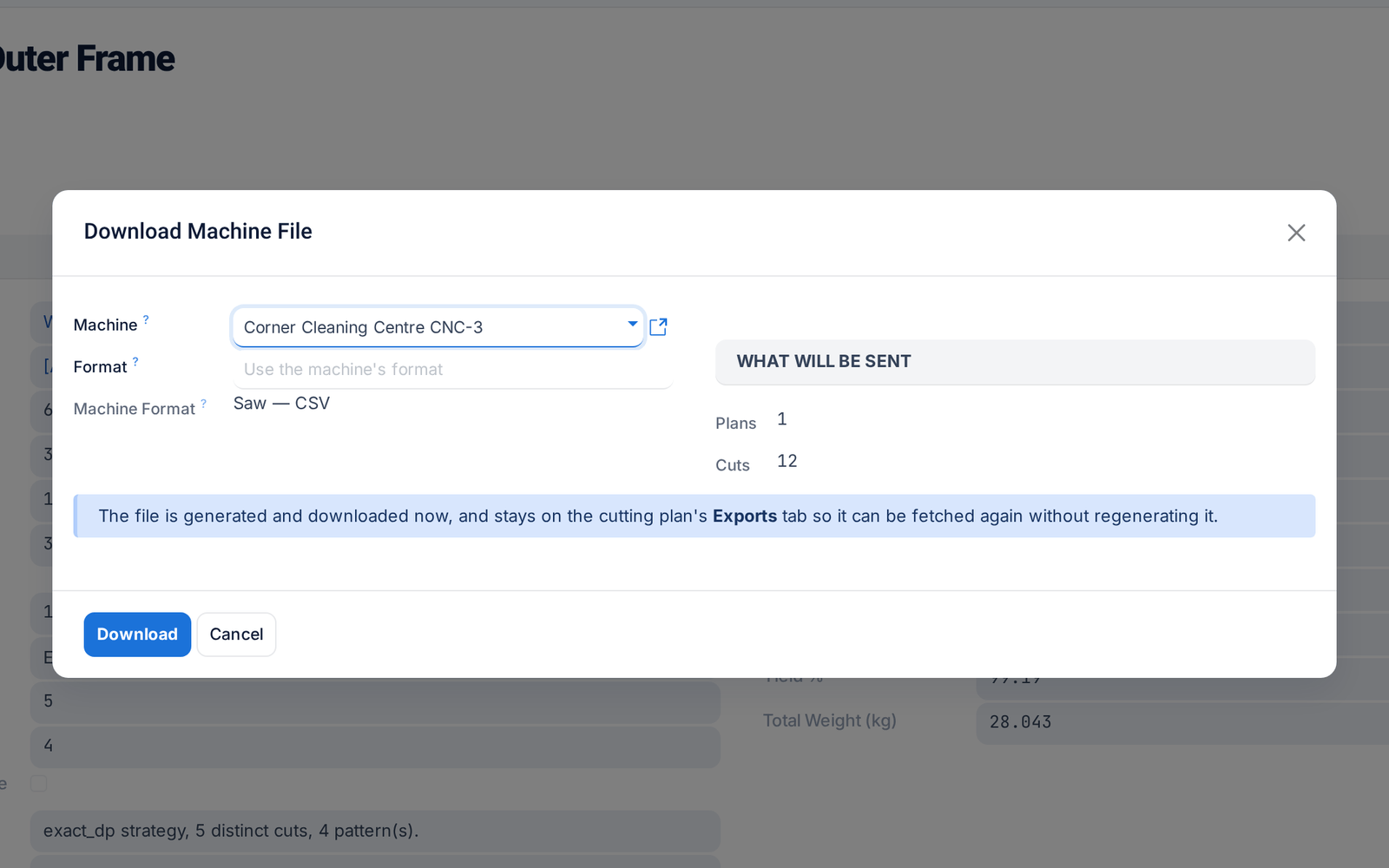
Send a cutting plan straight to the saw or machining centre in its own format, including DXF and G-code. Every file sent is logged and can be downloaded again.
Before: Generating and delivering the file were separate.