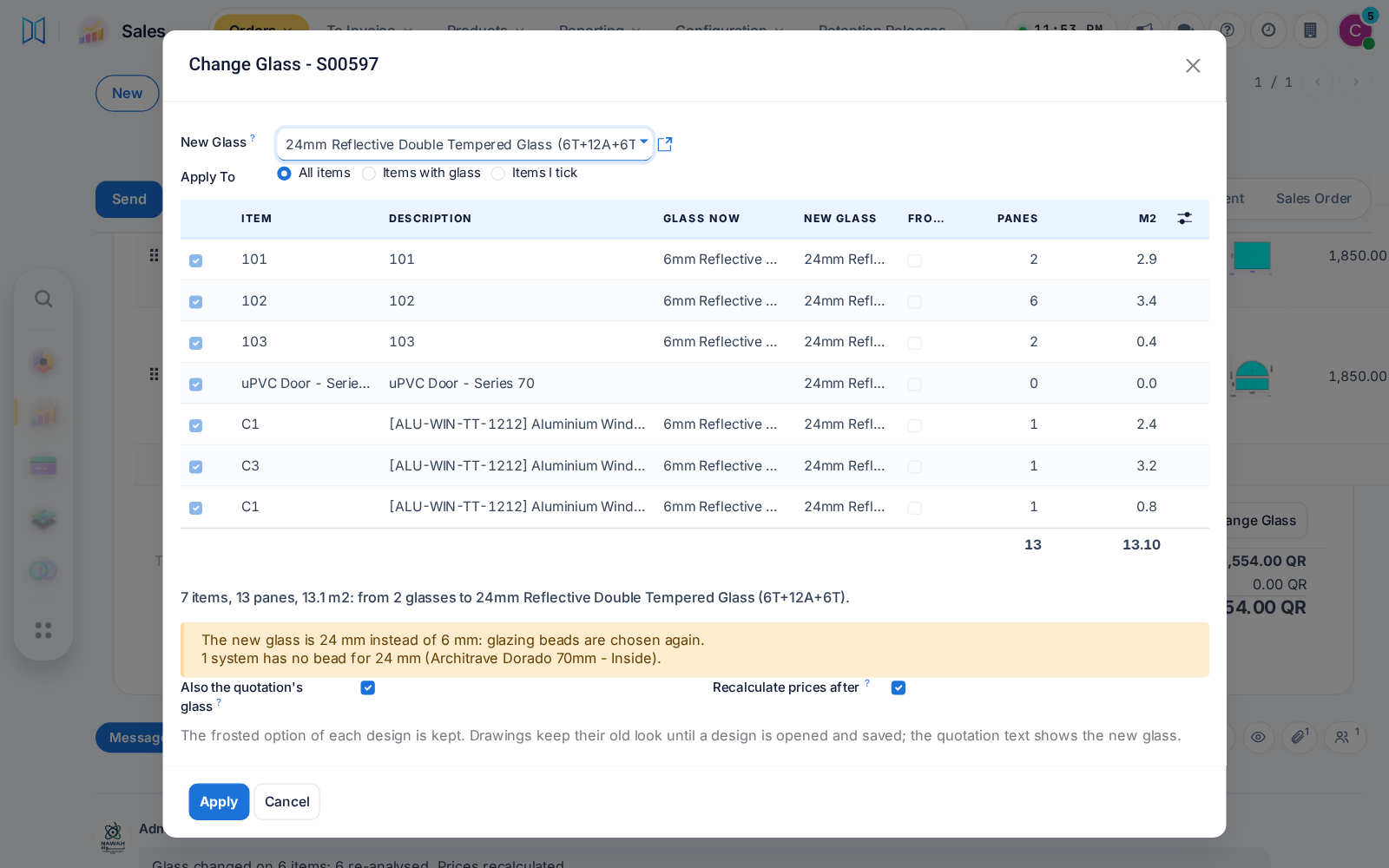

Change the glass on a whole quotation
One action swaps the glass on every item of a quotation, refreshes each design's material and recalculates the prices. Beads change only where the thickness does.
Before: Item by item in the designer.
One action swaps the glass on every item of a quotation, refreshes each design's material and recalculates the prices. Beads change only where the thickness does.
Before: Item by item in the designer.
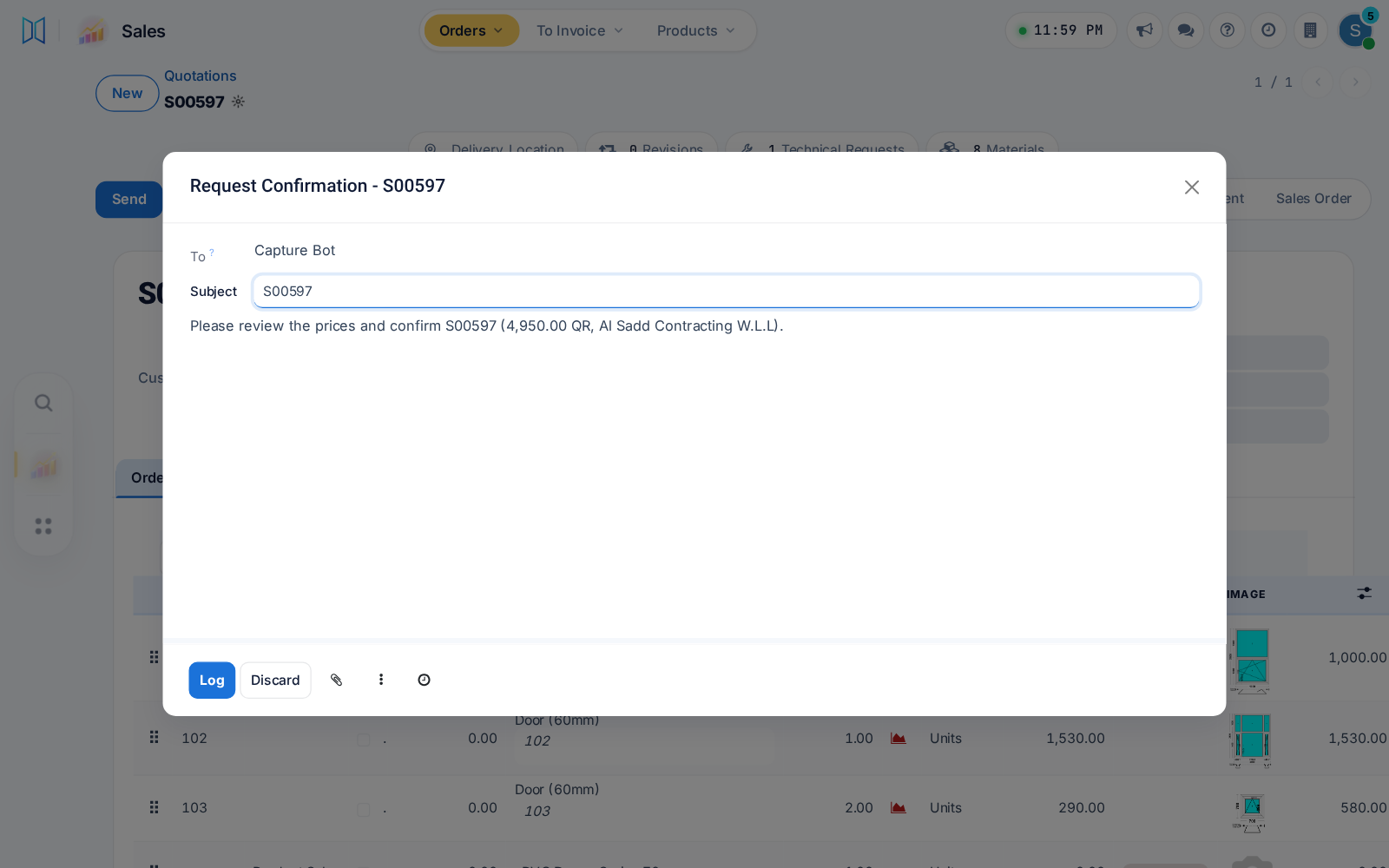
Name the users or groups who may confirm orders; others press Request Confirmation, and orders signed or paid online wait for them. An empty list keeps today's way.
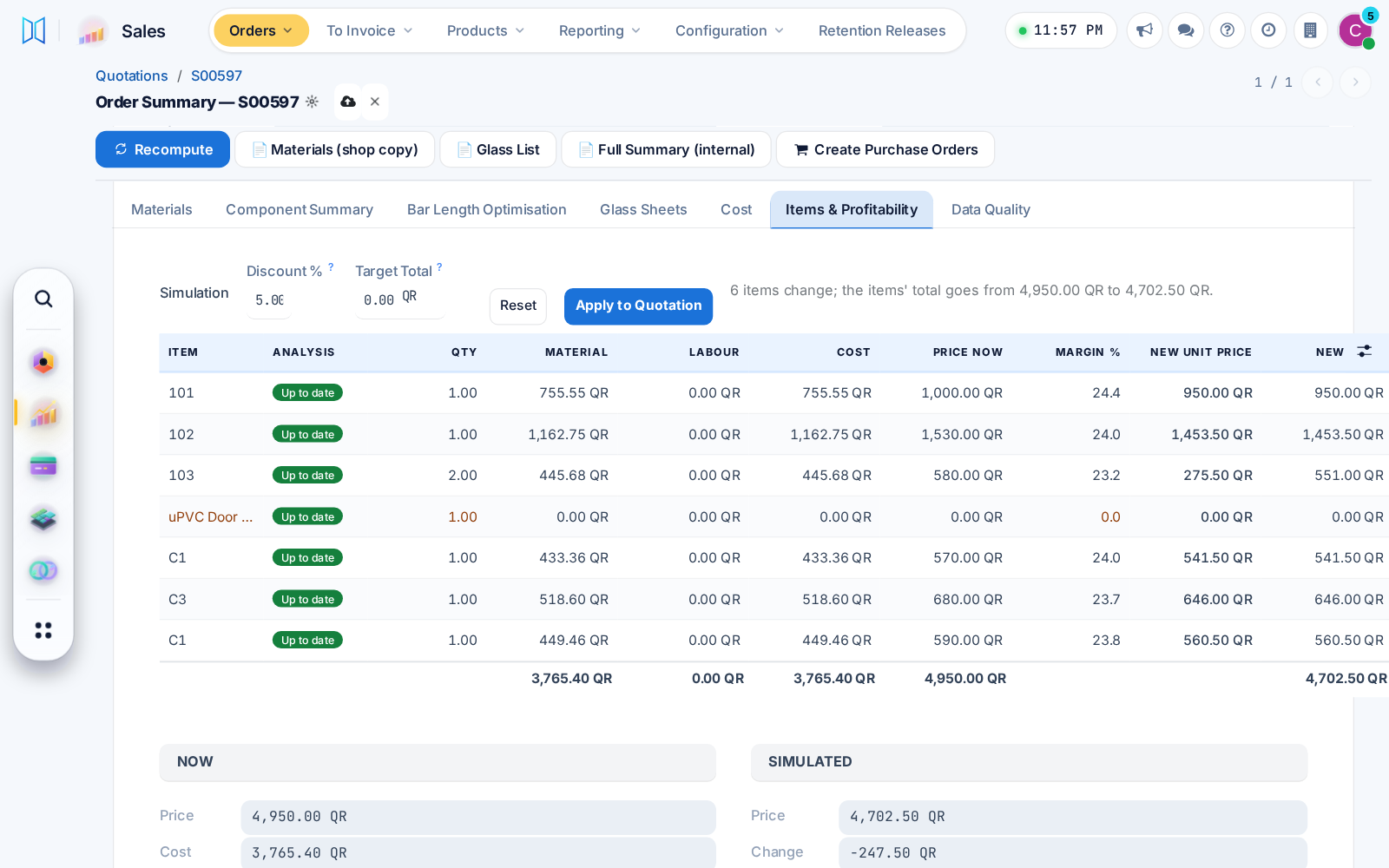
Items & Profitability simulates a new unit price, discount or target total and shows the new margin. A confirmer applies it to the quotation in one press, logged on the order.
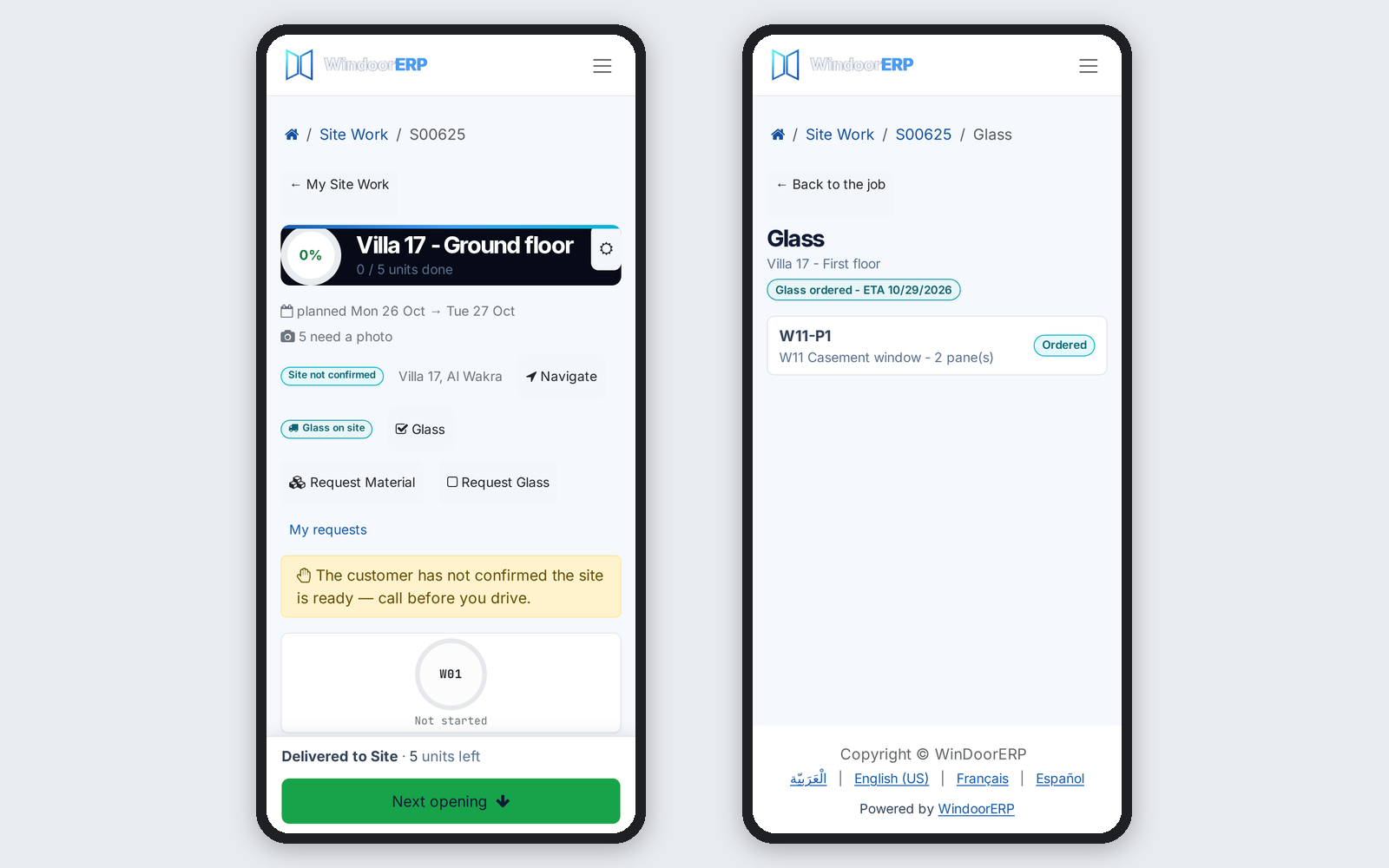
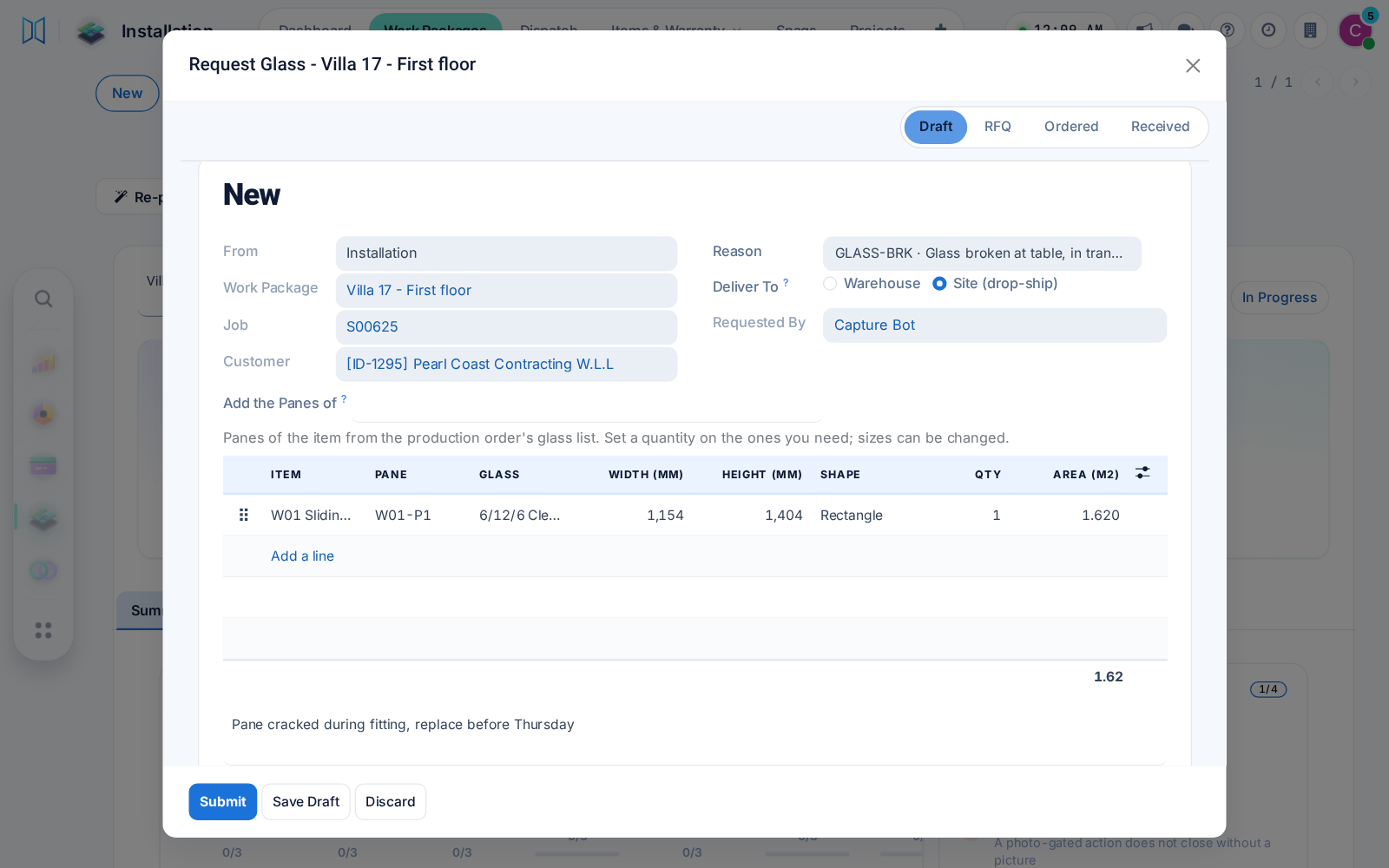
Glass can travel from the supplier straight to the site, one purchase order per work package. The crew ticks the panes received and reports broken ones from the phone.
Before: Glass came through the factory.
Production, installation and after-sales request glass by size or shape, with panes suggested from the design. Purchasing gets a draft request for quotation per supplier.
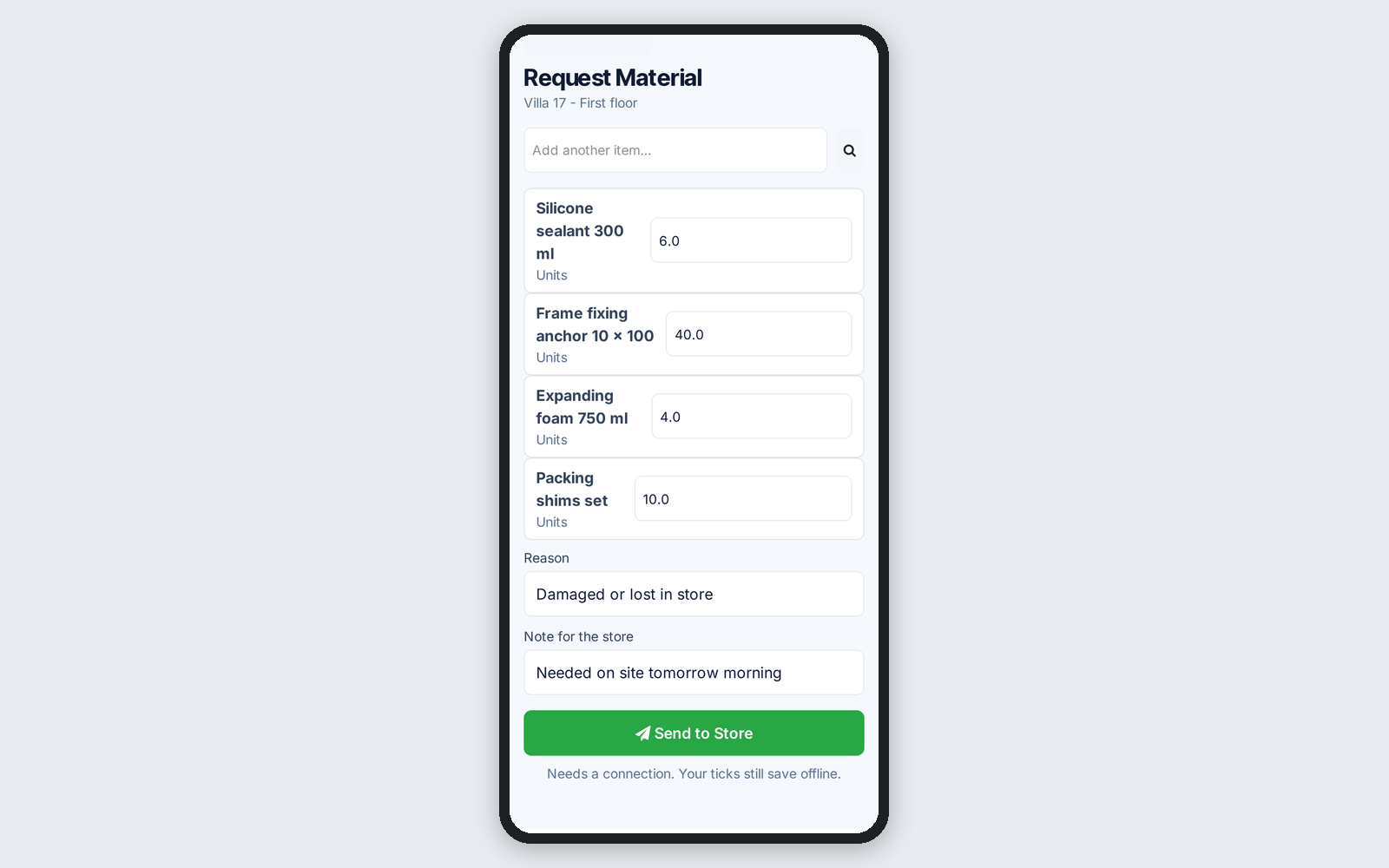
Work packages and the foreman's phone request material from the store with a reason, on the same form production uses for extra material.
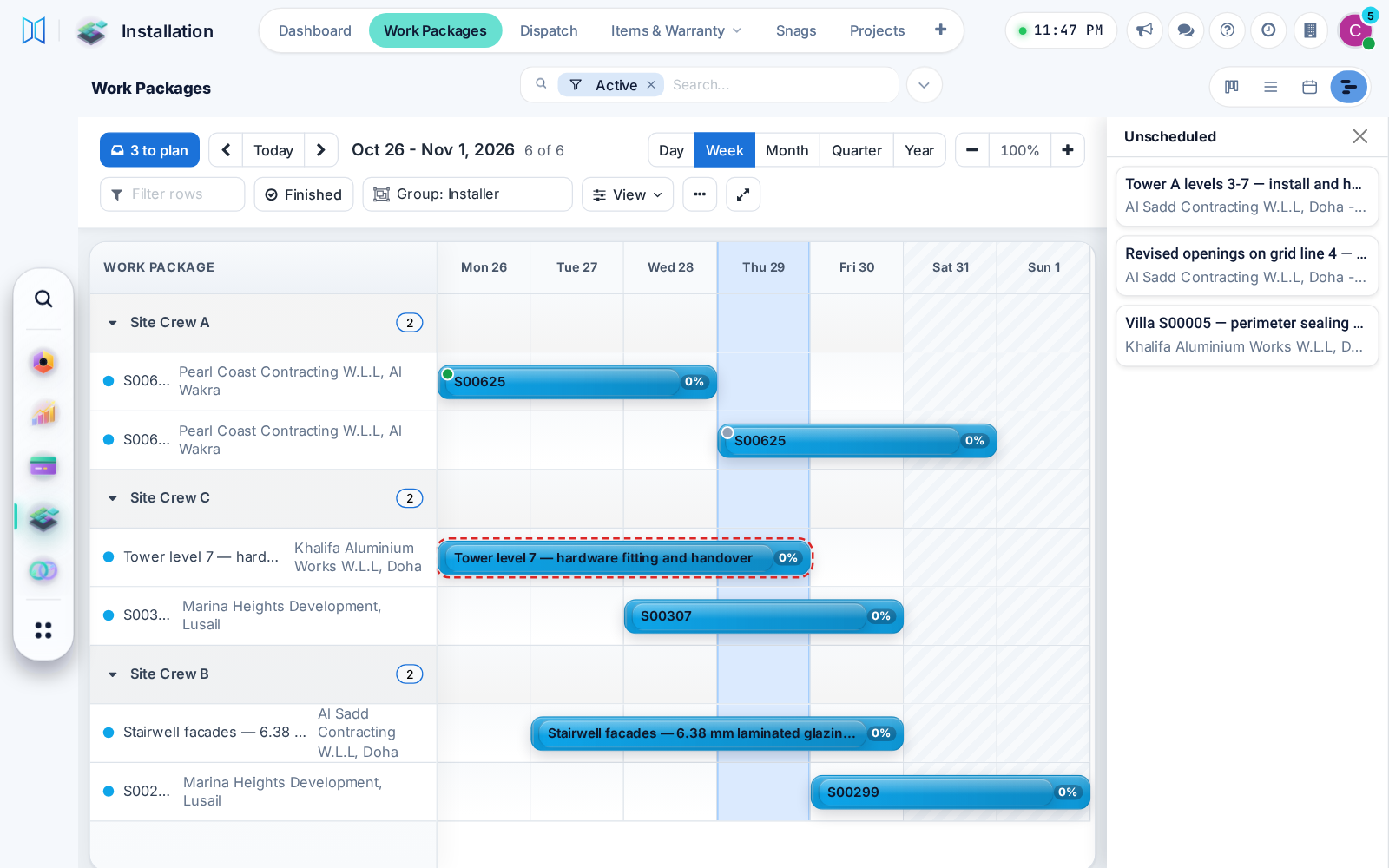
Work packages get a Gantt view: drag packages from a tray onto a day, move a bar to another crew, and spot double-booked crews, on desktop or phone.
Before: A separate schedule menu.
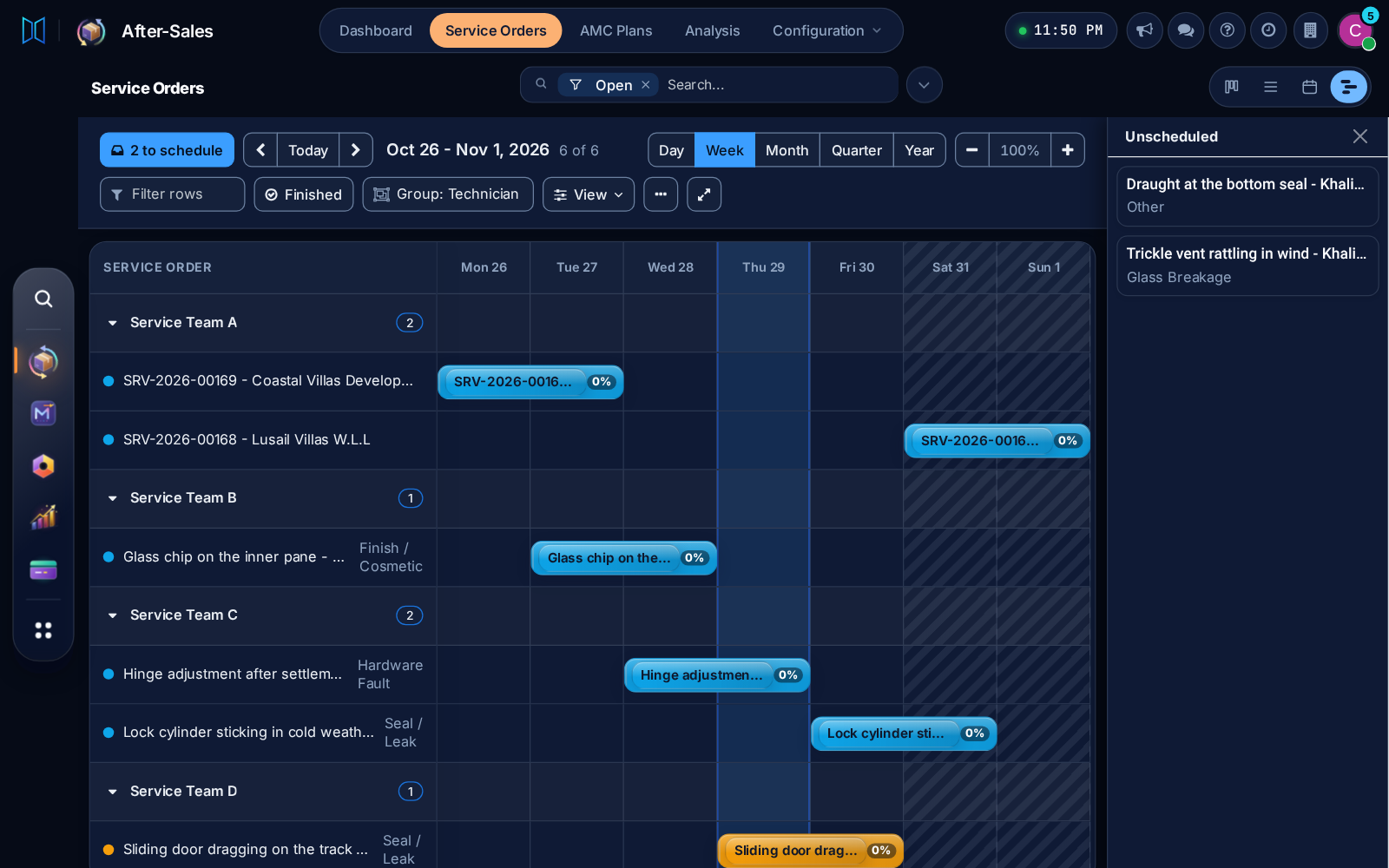
Production orders and service orders use the same Gantt view, with its tray, dark mode and phone layout, so every schedule works one way.
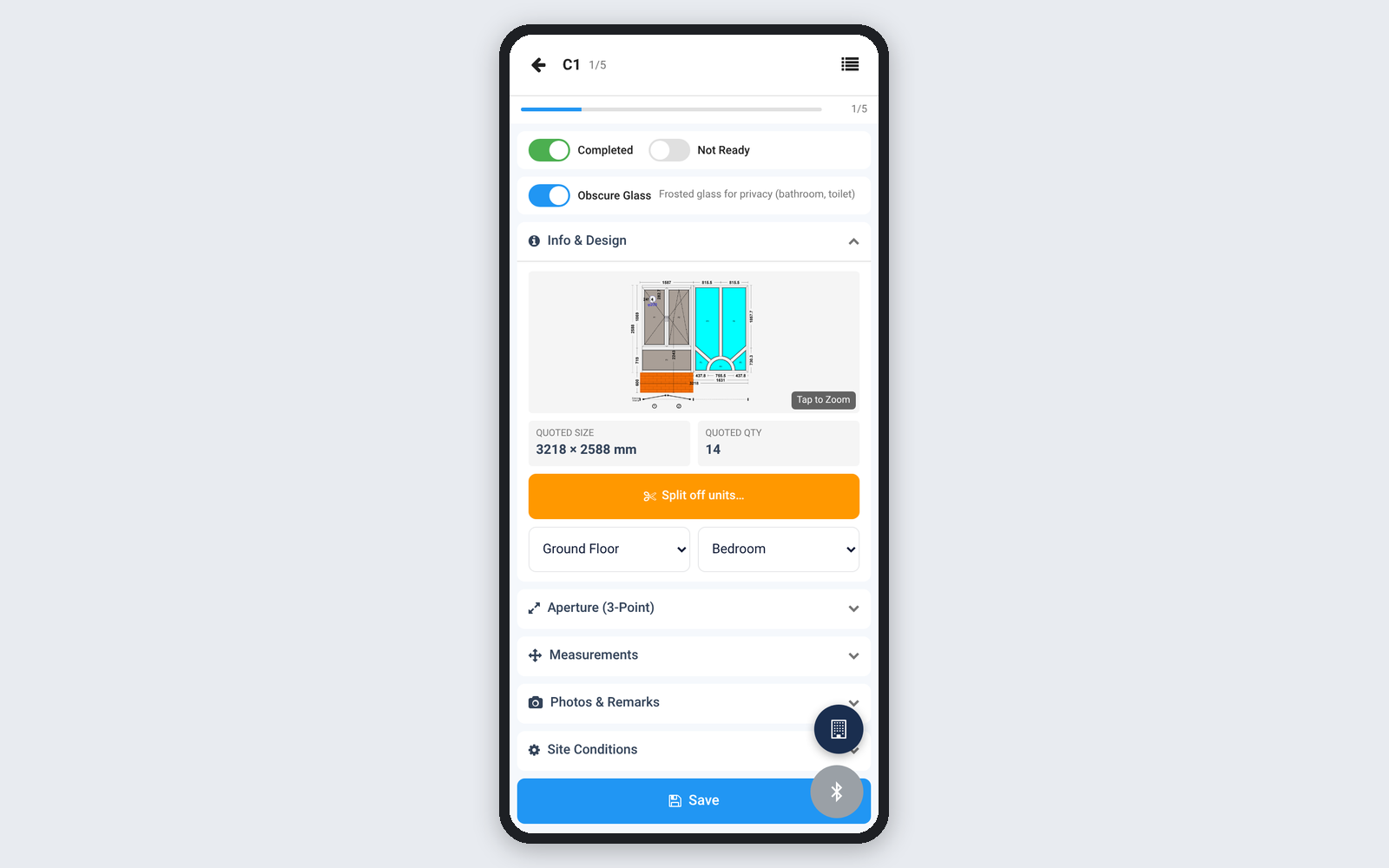
Surveyors can mark obscure glass on both phone measuring sheets, and the choice reaches the office with the item's sizes.
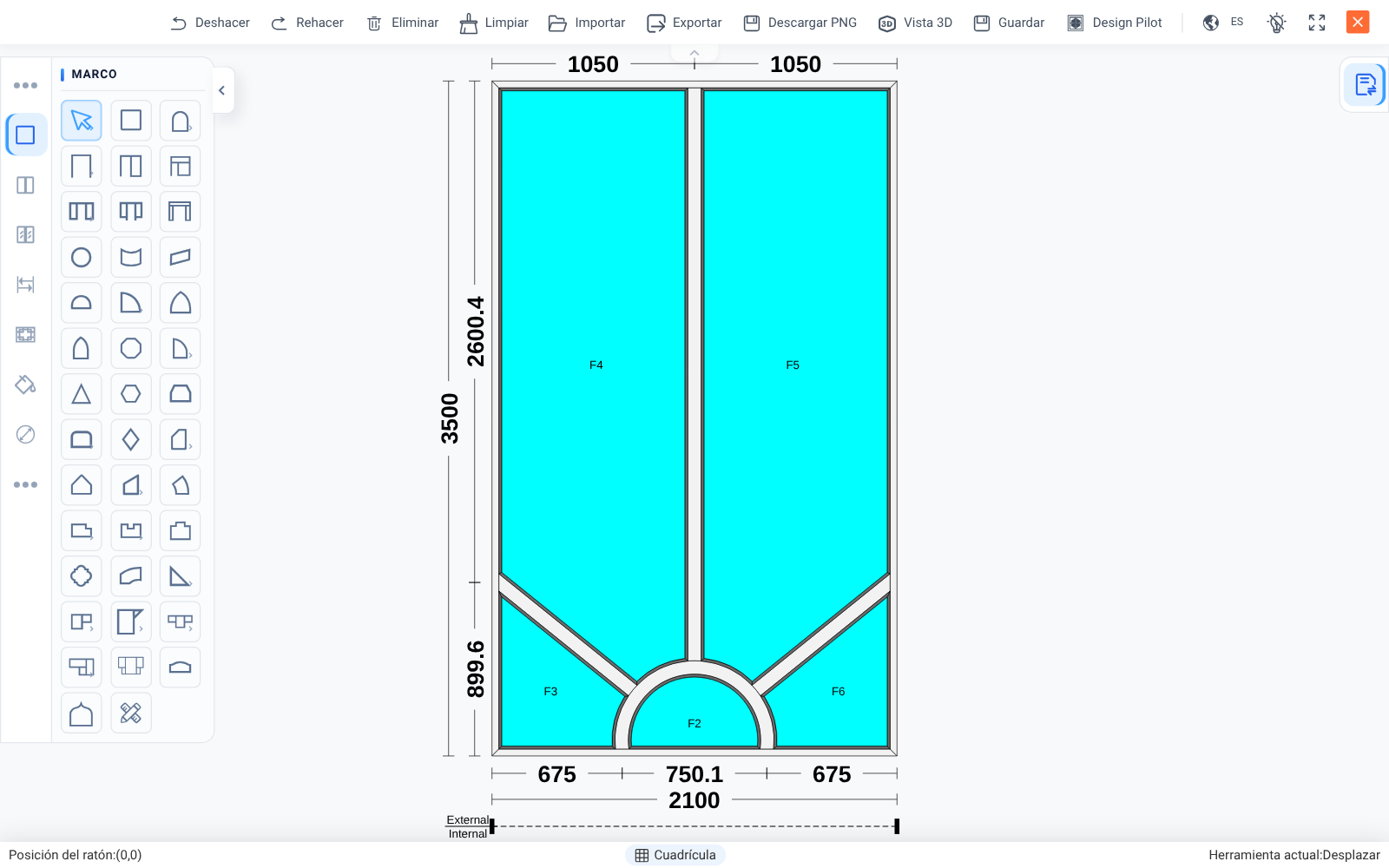
Every screen, the window designer and the home screen now speak Spanish, and the designer opens in each user's own language.
Apps can sit in a floating dock that keeps your recent ones close, and a launcher finds any app or menu as you type.
Your user menu will list the changes live in your own system, in your language, with a link to ask us about any of them.
One production order can ship frames first and sashes with glass later, as two deliveries with their own site visits and a sash sizes report.
A length correction can now apply to chosen products only, such as a support mullion cut to full frame height. Existing cut lists do not change.
Product and glass stickers now show a small drawing of the window with that pane marked, so the site crew sees at once where each piece goes.
Before: Stickers showed plain boxes.
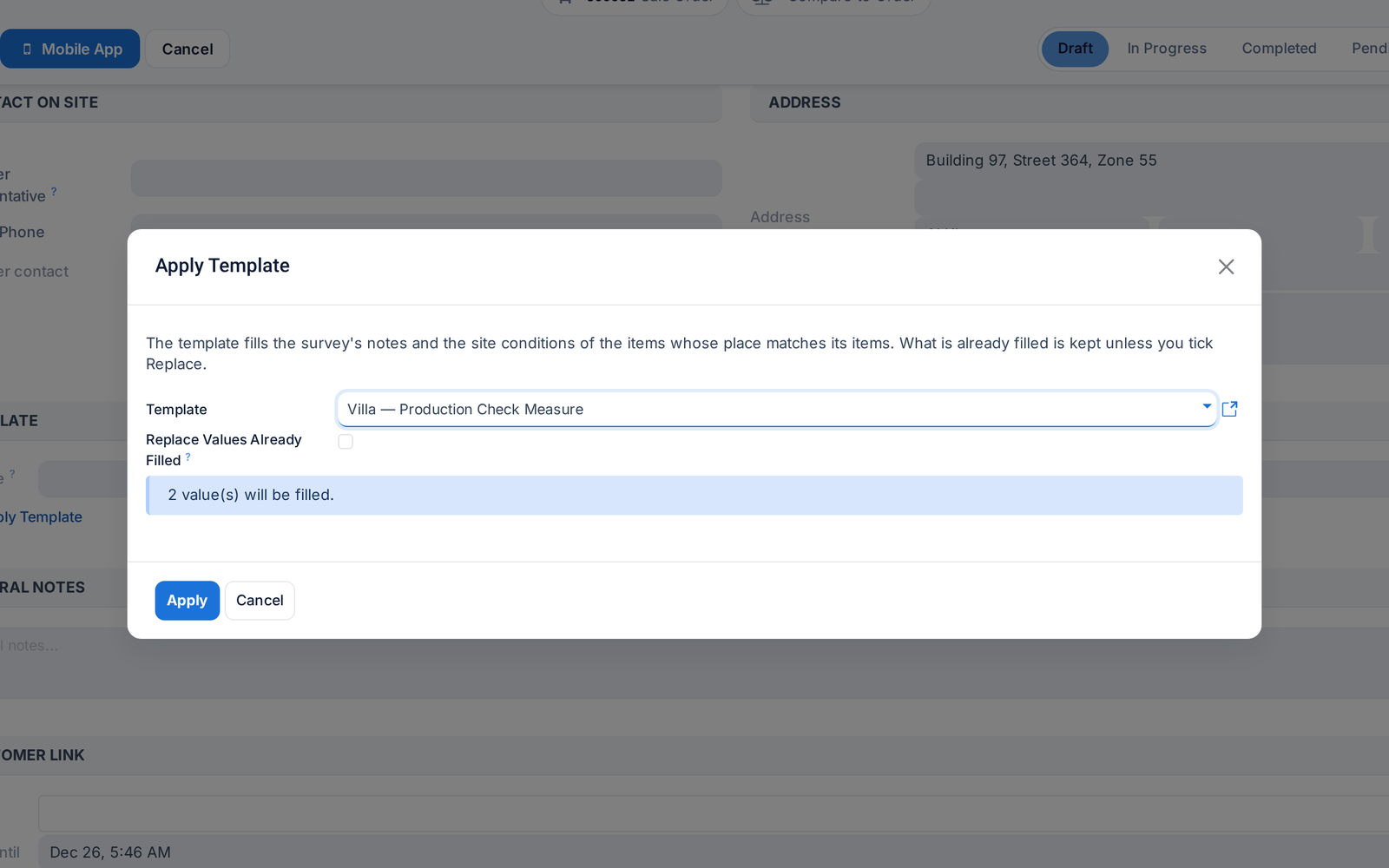
Survey templates can now be applied to a new or draft survey, filling empty values and keeping what is already filled.
Before: Templates could not be applied.
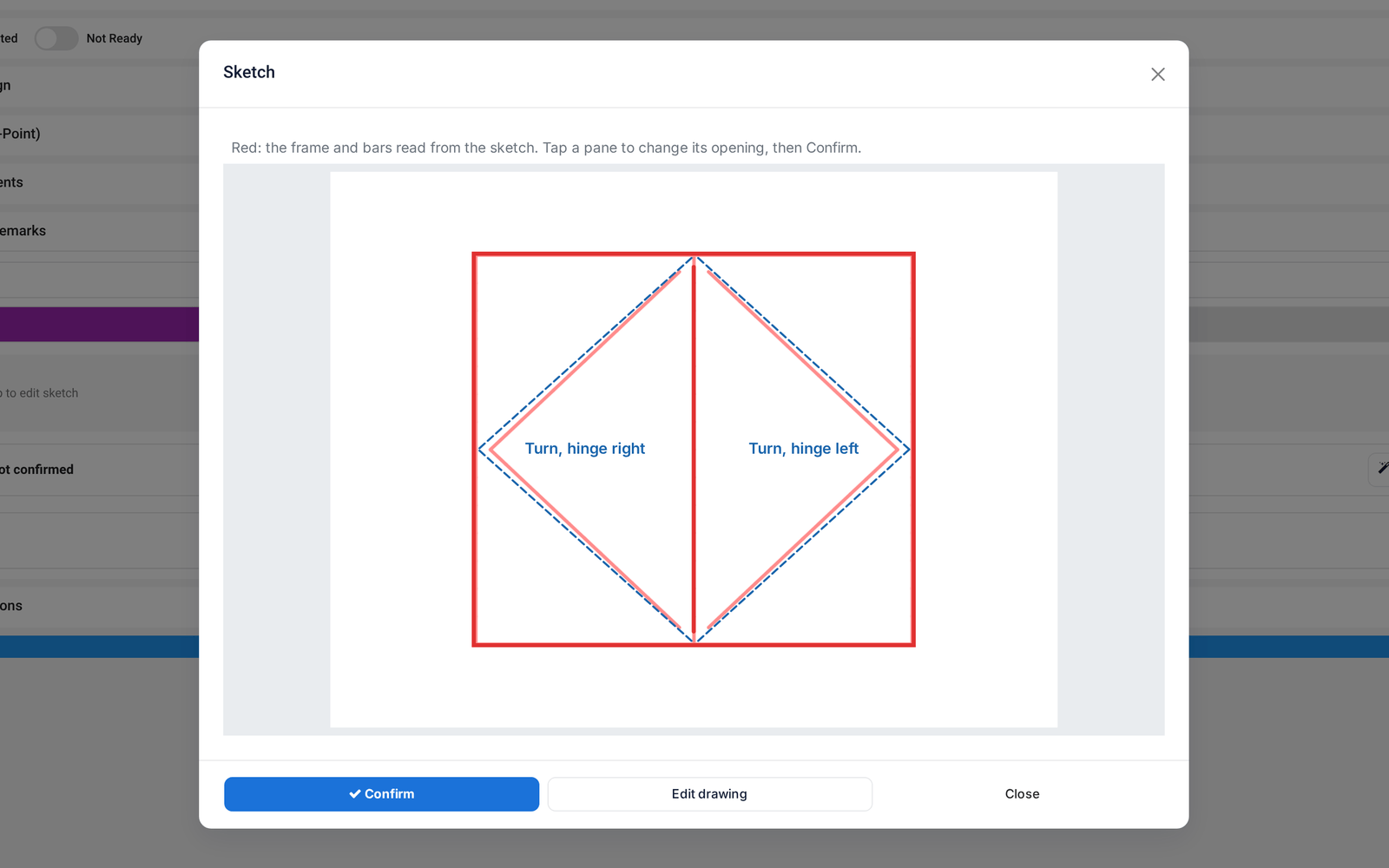
A hand sketch of a window becomes a real layout, on site in the measuring app or in the designer, and is matched to the right order line. No AI needed.
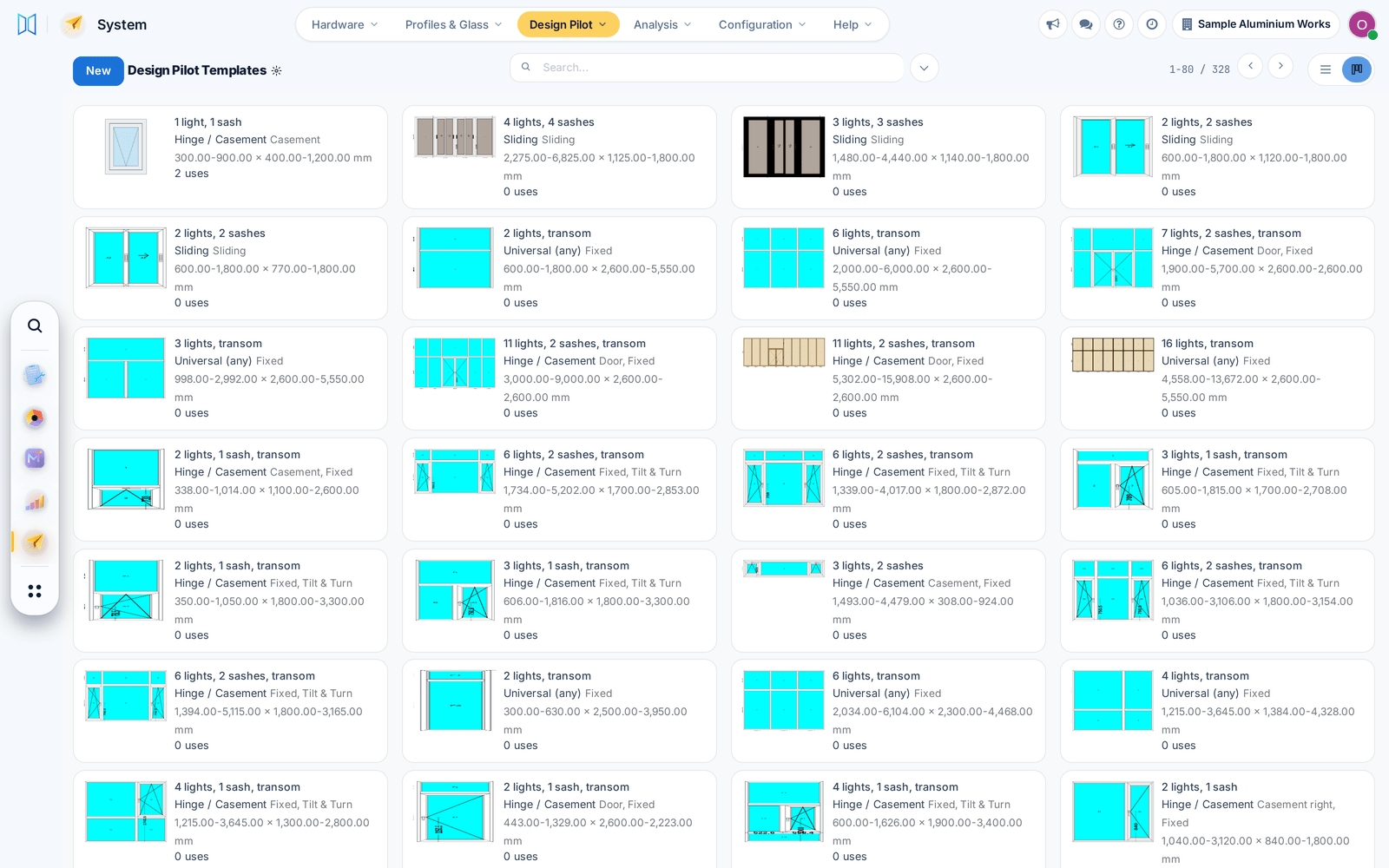
Design Pilot comes with a few hundred ready layouts, and near-identical layouts in your library can be merged, with undo.
Design Pilot suggests layouts from your library that fit each window's size, ready to apply in the designer or to every undrawn line of a quotation.
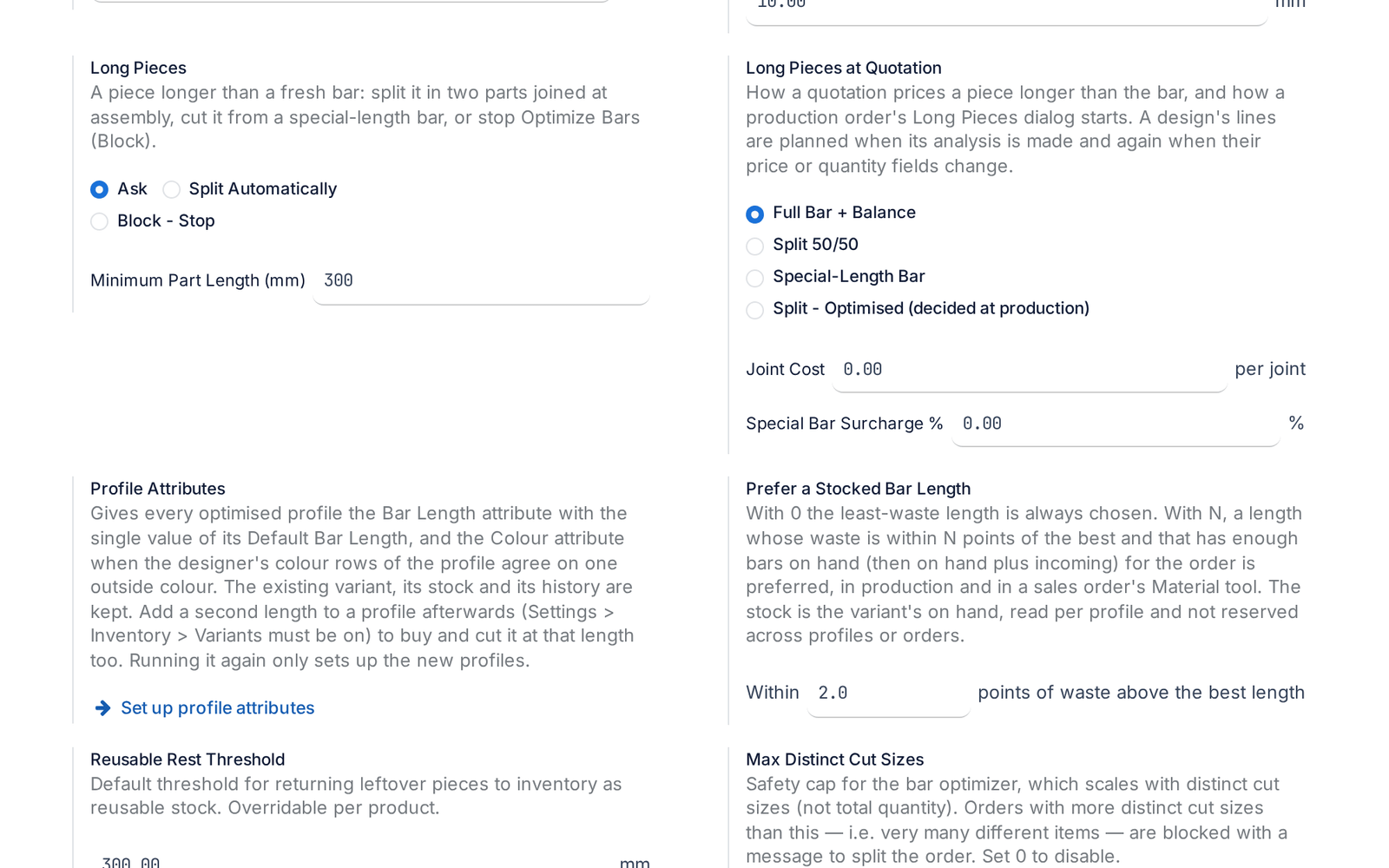
A piece longer than any stock bar is split with a joint or ordered as a special bar, and the quotation already prices it.
Before: Such a piece stopped the optimisation.